
Is Home Staging Worth It? How Staging Can Affect Your Net Sale Proceeds
Staging before photography and video can strengthen a home’s first impression, support buyer interest, and help protect net sale proceeds when its likely benefits outweigh the cost.
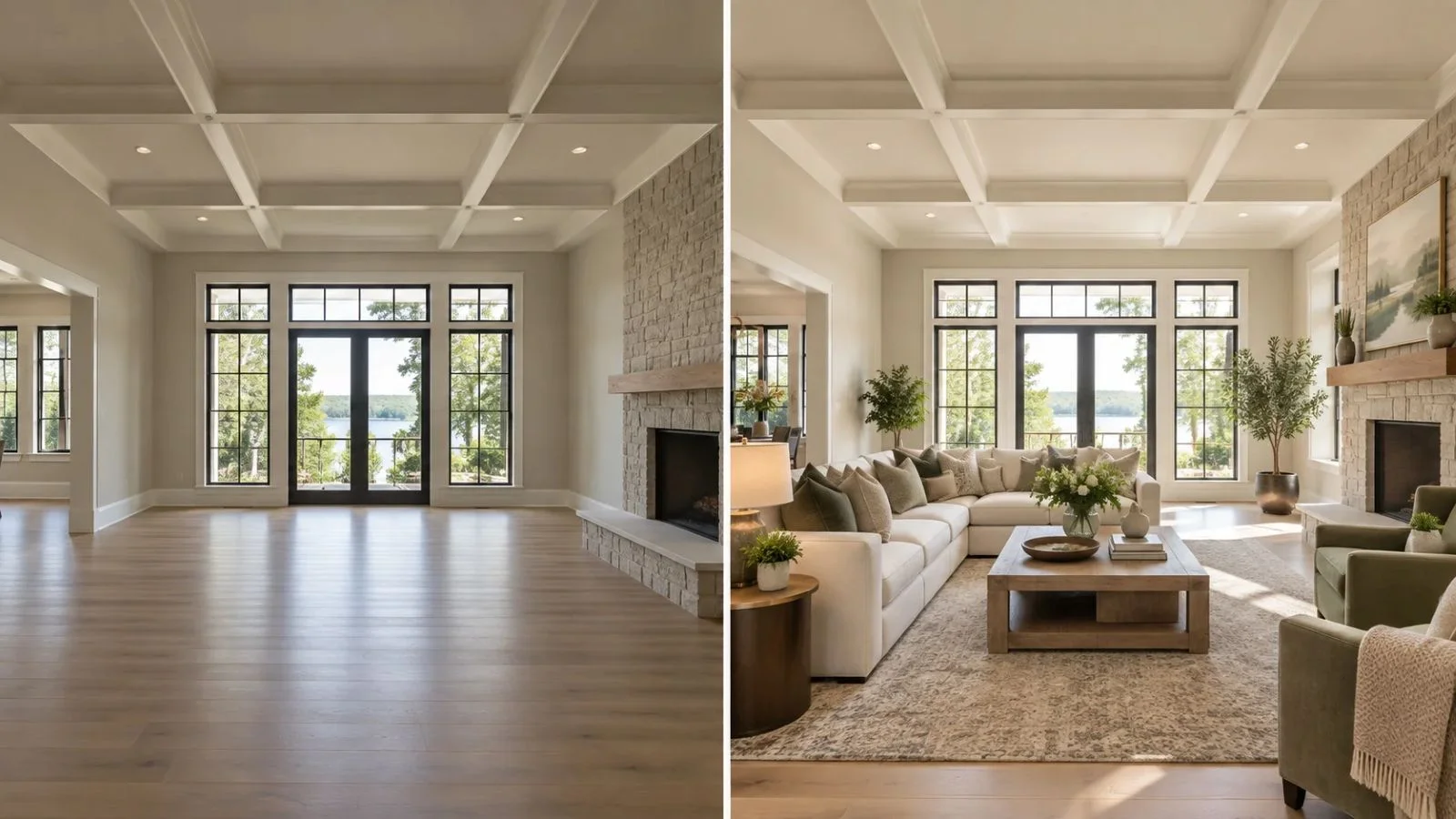
Thoughtful staging can support stronger buyer interest, reduce the risk of extended market time or price reductions, and potentially improve net sale proceeds. It is not simply decorating. I look at staging as a marketing and financial decision: making sure the home competes as well as possible before it reaches the market.
Buyers typically see photography and video before deciding whether to schedule a private showing. That makes the home’s online presentation especially important. Staging should be complete before professional media is produced, so each room communicates its scale, light, function, and overall condition clearly from the first impression.
Staging does not guarantee a higher sale price, a faster sale, or a specific return. Pricing, location, condition, current competition, and buyer demand still matter. But better presentation can help a qualified buyer engage with the property more confidently.
Why Staging Matters Before a Buyer Ever Visits the Home
The First Showing Often Happens Online
Photography, video, and the online listing presentation are often a buyer’s first interaction with a Naples home. Before requesting a private appointment, buyers are usually deciding whether the property appears to fit their needs, expectations, and lifestyle from a screen.
That makes the home’s presentation consequential. A property that feels bright, spacious, orderly, and intentional in its media is more likely to earn attention than one that appears dark, crowded, overly personal, or unfinished. If buyers cannot understand a room’s scale, layout, or purpose online, they may move on without ever seeing a home that could have appealed to them in person.
Staging should be completed before professional photography and video are produced. The goal is to give the home its strongest, most accurate first impression and then maintain that same show-ready presentation for appointments.
Staging Is Not the Same as Decorating
In my view, staging is strategic editing and presentation, not an effort to impose a design trend or reflect the seller’s personal taste. It should help a broad range of qualified buyers see the home’s natural light, visual flow, architecture, views, outdoor living, and intended use of each space.
The right approach may mean removing furnishings rather than adding them. It may mean clarifying an awkward room’s function, opening a view, or reducing visual distractions so the home itself remains the focus.
Staging should support—not conceal—the property’s genuine features and condition. It cannot substitute for needed repairs, cleaning, maintenance, or appropriate pricing. The goal is not decoration. The goal is buyer confidence.
The Financial Case: How Staging Can Affect Net Sale Proceeds
Staging does not create value independently of the home’s location, condition, pricing, and buyer demand. It can, however, help protect the opportunity to achieve the best feasible result by making the property more competitive from the moment it reaches the market.
More compelling photography and video may generate stronger early interest and more showing requests. When buyers can immediately understand a home’s scale, natural light, layout, views, and intended use of each space, the property is better positioned against similar listings. A home that appears crowded, dark, overly personal, or unfinished online may be discounted before a buyer ever visits.
In my experience, staged homes tend not to remain on the market as long as comparable unstaged homes. That is not a universal rule, but it reflects a practical reality: homes that present clearly often receive more productive early attention. Better engagement may support stronger offer terms as well as price, including fewer concessions, cleaner contingencies, or a buyer who is more confident moving forward.
The financial benefit can extend beyond the purchase price. A well-positioned home may be less likely to need repeated price reductions. If staging contributes to a shorter marketing period, it may also reduce holding costs such as utilities, maintenance, insurance, association obligations, and financing costs where applicable.
The National Association of REALTORS® reported in its 2025 Profile of Home Staging that 83% of buyers’ agents said staging makes it easier for buyers to visualize a property as a future home. About half of sellers’ agents reported that staged homes spent less time on the market, and more than one-quarter of real estate professionals said staging helped sellers receive offers that were 1% to 10% higher in dollar value. These are survey-reported observations, not proof that staging alone causes a particular price increase or sale timeline. They do reinforce why presentation deserves serious consideration before launch.
The Cost Should Be Evaluated Against the Likely Benefit
The question is not whether staging produces a guaranteed return. It is whether the likely improvement in buyer response, negotiating position, and avoided carrying costs justifies the expense for this particular home.
Costs vary materially based on the scope of work, property size, occupancy, existing furnishings, rental duration, and market conditions. A higher gross sale price improves net proceeds only if the added proceeds—and any carrying costs avoided—outweigh staging expenses.
Stronger Presentation Can Protect Negotiating Position
Buyers often interpret a listing’s presentation as a signal of overall care and condition. If a home feels overlooked, stale, poorly maintained, or difficult to understand, buyers may approach it expecting a discount.
Staging cannot solve deferred maintenance or an unrealistic price. But it can help ensure that buyers focus first on the home’s genuine strengths rather than distractions that weaken confidence.
What Effective Staging Actually Involves
Effective staging begins with decluttering and depersonalizing. The goal is to let buyers see the home—not the seller’s possessions, routines, or design preferences.
Excess furniture, collections, crowded countertops, overfilled shelves, and personal wall displays can make otherwise generous rooms feel smaller and harder to understand. Family photographs, identifying materials, mail, and highly personal items should be removed before photography, video, and showings. Buyers should be able to picture their own lives in the space without distraction.
Staging should also give every room a clear purpose. A room that appears to be part office, storage area, and guest room may create uncertainty; a thoughtfully arranged space helps buyers understand its scale and function immediately.
Make the Home Feel Larger and Easier to Understand
Reducing excess furniture is often one of the highest-impact refinements. Clear walkways improve visual flow, while appropriately sized furnishings help buyers read the proportions of a room. Windows, architectural details, water views, golf-course views, and natural light should remain visible rather than being blocked by heavy furniture or crowded accessories.
Small finishing touches can make a home feel lived in without making it feel personal. Setting an indoor dining table or outdoor dining area, adding fresh flowers or restrained natural accents, using coordinated accessories, and placing generic framed images where needed can bring balance to photography and video. Fresh bedding and towels can also improve the presentation of bedrooms and baths. Candles are also a nice touch that can bring photos and video to life.
Focus on the Spaces Buyers Remember
I would prioritize the entry, main living spaces, kitchen, primary bedroom, primary bath, and outdoor living areas. In Naples, terraces, lanais, pools, patios, and outdoor dining spaces can be central to the property’s appeal and deserve the same attention as the interior. This is particularly true for homes valued for a Naples beach and coastal lifestyle, where buyers often assess the relationship between indoor space, outdoor living, and location together.
Staging is not a substitute for necessary preparation. It cannot overcome deferred maintenance, visible damage, strong odors, poor cleanliness, or an unrealistic list price. The purpose is to present the home’s genuine strengths clearly and confidently.
Occupied, Vacant, and Virtual Staging: Choose the Right Level of Preparation
The right staging plan depends on how the home is currently furnished, its condition, and how it needs to compete. An occupied home often needs strategic editing rather than a complete redesign: remove excess furniture and personal belongings, improve furniture placement to clarify flow and scale, and selectively add linens, accessories, art, or a few key pieces where they will improve the presentation.
When a Staging Consultation May Be Enough
For a well-maintained occupied home with appropriate furnishings, a staging consultation may be sufficient. The objective is to make the architecture, natural light, views, and intended use of each room easier to understand—not to replace everything the seller owns.
When Professional Staging May Be Worth Considering
Vacant homes can be harder to interpret online and in person. Empty rooms may appear smaller than they are, and buyers may struggle to understand furniture placement or room function. Partial or full furniture staging can be worth considering when scale, layout, luxury positioning, or outdoor living areas are central to the property’s value.
In my view, professional staging deserves particular consideration for vacant homes, distinctive or unusual floor plans, competitive listing environments, and properties where photography and video will heavily influence showing activity.
Virtual staging can help illustrate an empty or dated room in marketing, but it should never misrepresent the property. Materially altered images should be disclosed and must comply with applicable MLS and advertising rules. It also does not replace preparing the actual home for showings; buyers should encounter a property that feels consistent with its online presentation.
Prepare Once, Then Protect the Presentation Through Showings
The best sequence begins with an honest review of the home’s condition, likely buyer profile, and current competition. From there, address repairs, cleaning, odors, and maintenance concerns before decluttering, depersonalizing, and staging the key spaces.
Professional photography and video should be scheduled only once the property is fully camera-ready. Buyers often arrive with expectations formed by the listing media, so substantial changes afterward can create an avoidable disconnect between the online presentation and the in-person showing experience.
Once the home is launched, preserve that standard. Keep surfaces clean, closets orderly, window coverings open when appropriate, and walkways clear. Terraces, lanais, pools, patios, and outdoor dining areas deserve the same attention as interior living spaces, particularly in Naples, where outdoor living and views may be central to the buyer’s decision.
Preparation should also include privacy and security. Before media is produced or showings begin, remove medications, mail, financial documents, keys, valuables, firearms, children’s schedules, and other identifying information.
The goal is consistency: a home that looks compelling in photographs and video, then feels equally well cared for when a buyer walks through the door.
A Practical Decision Framework for Sellers
The right level of staging depends on the property, not a generic checklist. Before recommending an investment, I would evaluate how the home photographs in its current condition and how it compares with the listings a buyer is likely to see alongside it.
Key questions include whether each room’s scale and purpose are immediately clear, whether furnishings support or distract from the architecture, views, and natural light, and whether the home is occupied or vacant. A well-maintained occupied home may only need editing, rearrangement, and a few finishing touches. A vacant home, particularly one with a more complex layout or significant outdoor living areas, may need more help defining how the spaces live.
The financial question is equally important. Staging costs should be weighed against the potential cost of weak initial exposure, extended market time, carrying expenses, or price reductions prompted by a home that does not compete well online.
In my view, the most effective plan is usually targeted. Focus on the spaces and visual issues most likely to influence buyer confidence: the entry, primary living areas, kitchen, primary suite, views, and outdoor spaces. For Naples luxury homes with distinctive architecture or floor plans, a personalized pre-market evaluation is generally more useful than applying the same staging formula to every property.
Conclusion: Staging Is Part of Protecting the Home’s Best Opportunity
Most buyers decide whether a home merits a private showing after they have seen the photography and video. That makes staging before media production an important pre-market step, not an afterthought.
The objective is straightforward: declutter, depersonalize, define each room’s purpose, add restrained finishing touches, and keep the home consistent with what buyers saw online. The result should be a clearer presentation of the property’s scale, light, flow, views, and lifestyle—not a different version of the home.
Thoughtful staging may support stronger buyer interest, firmer positioning against competing listings, fewer or smaller price adjustments, and potentially lower carrying costs. Those factors can help protect net sale proceeds, but results still depend on the property’s condition, pricing, location, competition, and market demand.
Before scheduling photography or video, evaluate the home’s presentation, likely competition, and the level of staging that is appropriate. Sellers considering a Naples sale can request a pre-market perspective at BoydRE.com/sell.



.webp)